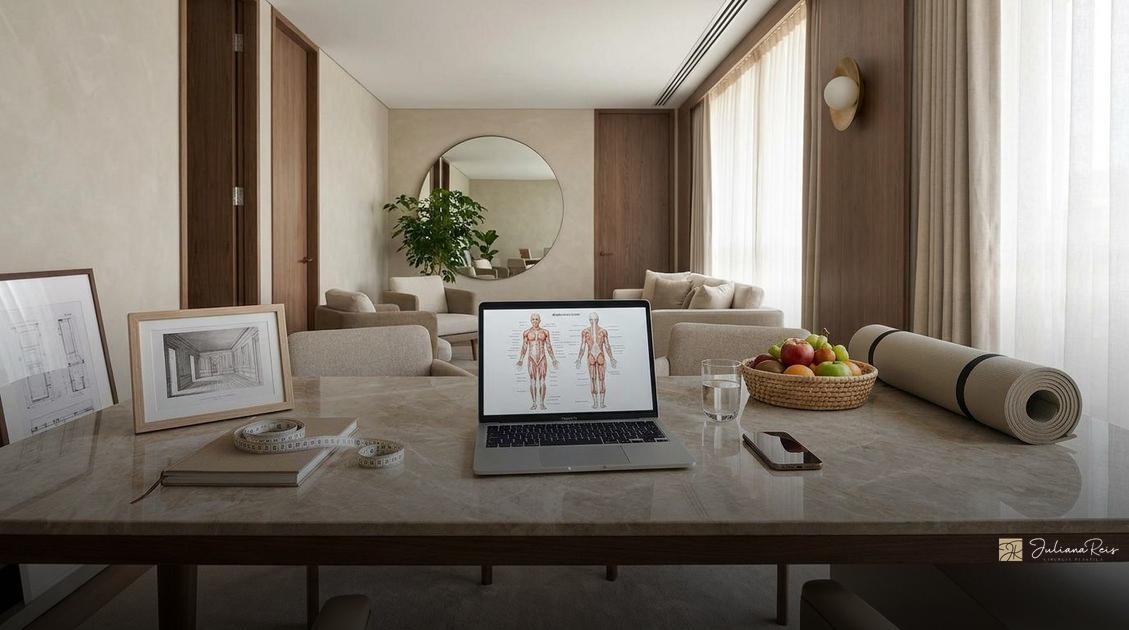
Do you feel constant physical discomfort and emotional weight when you look in the mirror? Perhaps you have gone through a massive weight loss journey, or maybe multiple pregnancies have drastically changed your body. You might be struggling with excess skin, heavy breasts, and an abdominal contour that no rigorous diet or physical activity seems to resolve. If you are seeking a complete and safe transformation, you might be considering tummy and breast reconstructive surgery. In my office, the first thing I do is actively listen to your story. I understand the deep frustration of feeling disconnected from your own reflection and the desire to regain functional and aesthetic harmony without falling for empty promises.
The outcome of your plastic surgery does not depend solely on the operating room. As a USP-trained plastic surgeon, I realized early on that aesthetic success and surgical recovery are deeply tied to your daily habits and overall health. That is why I use tools from lifestyle medicine in my clinical practice. We treat patients seeking post-weight loss body contouring by adjusting nutrition and daily habits even before thinking about the scalpel. My main specialty is plastic surgery, but I rely heavily on the foundations of a healthy lifestyle to ensure that your results are not only beautiful but also sustainable and safe.
Many patients arrive at my office overwhelmed by unrealistic transformations found on the internet. They desire a flawless silhouette, but they fear the risks associated with complex surgical procedures. My approach is entirely different. I believe in establishing realistic plastic surgery expectations from the very first consultation. I discuss the pros, cons, and limitations of every procedure in an extremely sincere manner. When we talk about reconstructive breast and abdomen surgery, we are discussing major interventions that require profound respect for your anatomy and your metabolic health.
What does the combination of abdominal and breast surgery entail?
When we discuss combining these procedures, we are referring to a comprehensive approach to body harmony. Abdominoplasty, commonly known as a tummy tuck, focuses on removing excess skin and fat from the middle and lower abdomen while tightening the muscles of the abdominal wall. This is particularly crucial for women who have experienced significant weight fluctuations or multiple pregnancies, leading to diastasis recti, which is the separation of the abdominal muscles.
Simultaneously, breast reconstructive surgery, which may involve a mastopexy (breast lift), breast reduction, or the use of silicone implants, aims to restore the youthful position and shape of the breasts. Gravity, aging, and weight loss naturally deplete breast volume and skin elasticity. By combining these two powerful procedures, we address the torso as a single functional and aesthetic unit. This combined approach is frequently highly effective for post-weight loss body contouring, providing a balanced silhouette that isolated surgeries might not achieve.
In many cases, I also integrate high-performance liposculpture into this surgical plan. This allows us to refine the flanks, the back, and other adjacent areas, ensuring a smooth transition between the breast and the abdomen. However, it is essential to emphasize that liposculpture is a tool for refinement, not a method for systemic weight loss. The true foundation of a sculpted body lies in your preoperative commitment to your health.
Can you safely combine breast and stomach surgeries?
A frequent question in my practice is whether it is safe to perform these major surgeries simultaneously. The short answer is yes, provided that strict medical protocols are followed. Combining procedures offers the advantage of a single anesthesia event and a unified recovery period, which means you only need to take time off work and daily activities once. Furthermore, the overall financial investment tends to be lower compared to scheduling two separate surgical interventions.
However, safety is my absolute priority. Combining surgeries increases the total time spent in the operating room. Therefore, an extensive preoperative assessment is mandatory. We must analyze your cardiovascular health, your nutritional status, and your blood parameters. If your body mass index (BMI) is elevated, or if there are underlying metabolic issues, I might recommend postponing the surgery until those markers improve. My primary goal is your safety, and I will never compromise your health for the sake of aesthetic convenience.
It is also crucial to align your expectations regarding the immediate postoperative period. Recovering from both a tummy tuck and a breast lift simultaneously requires patience and discipline. You will experience limitations in your mobility, as you cannot stand entirely straight due to the abdominal tension, nor can you use your arms freely due to the breast incisions. Having a robust support system at home during the first two weeks is not optional; it is a fundamental requirement for a smooth and safe recovery.
How do lifestyle choices affect your surgical outcome?
I frequently explain to my patients that surgery modifies anatomy, but lifestyle sustains the result. I use the pillars of lifestyle medicine in my practice as a plastic surgeon because the scientific evidence is undeniable: patients who eat well, sleep adequately, manage stress, and exercise regularly experience fewer complications and enjoy superior aesthetic outcomes.
Nutrition plays a critical role in healing. Your body requires a high intake of quality proteins to rebuild tissues, close incisions, and produce collagen. Hydration is equally vital, as it facilitates cellular repair and helps the body flush out the medications used during anesthesia. I strongly encourage my patients to focus on an anti-inflammatory diet rich in whole foods in the months leading up to their reconstructive breast and abdomen surgery.
Physical activity is another non-negotiable pillar. While you will need to rest immediately after surgery, building muscle mass beforehand improves your metabolic rate and enhances the final body contour. I do not recommend one single type of exercise over another; whether you prefer weightlifting, pilates, cycling, yoga, or simply walking, the important thing is that the intensity and volume are controlled and adapted to your individual capacity. Moving your body safely prepares your cardiovascular system for the stress of surgery and significantly accelerates your return to normal activities.
Is reconstructive surgery different for patients with lipedema?
Many women from all over Brazil and abroad seek my expertise for body contouring, but during our consultation, we uncover another underlying issue that has caused them decades of physical pain and emotional distress: lipedema. Lipedema is not a disease of the adipose tissue; it is a connective tissue disease, in which the adipose tissue is one of the main components affected. It is a condition that predominantly affects women and is characterized by a disproportionate accumulation of diseased fat, typically in the legs and arms.
When dealing with lipedema, the surgical approach must change dramatically. It is not just a greater accumulation of adipocytes: there is more inflammation, more fibrosis, more flaccidity, more ligament laxity, and a higher risk of orthopedic complications. As someone who has been deeply involved in surgery and treatment for lipedema, I recognize that these patients require a highly specialized technique. I was one of the first doctors to perform this surgery in 2015 alongside Dr. Fábio Kamamoto, and since then, the evolution in our understanding of the disease has been immense.
Pain is the most common symptom of lipedema, present in about 86% of patients. This means that 14% of patients have lipedema without pain, so the absence of pain does not rule out the condition. However, there must be symptoms; patients with disproportionate fat distribution but absolutely no symptoms do not have lipedema. Another classic sign is the tourniquet sign, where there is a sharp demarcation of fat at the ankles or wrists. In these cases, arm and thigh liposuction is not an aesthetic luxury; it is a functional necessity to remove the diseased tissue, relieve pain, and restore mobility.
It is essential to clarify that lipedema and obesity are different diseases. One does not turn into the other. However, it is extremely common for the two to coexist. The fat accumulation of lipedema and the associated symptomatology, such as pain and heaviness in the legs, can lead to deformities and a more sedentary lifestyle, facts that can aggravate weight gain. The metabolic risk tends to be lower than in isolated obesity; however, when there is associated obesity, the metabolic risk becomes that of obesity.
How does a multidisciplinary approach optimize the treatment?
There is no magical treatment for lipedema and there is no single highly effective treatment, but there are many small interventions that, together, can yield a very good result. This justifies the absolute importance of follow-up with someone who understands the subject deeply, to provide options that make sense for each unique patient. As the clinical director of the Instituto Lipedema Brasil Ibirapuera, I guarantee that our patients receive comprehensive care.
We rely on a multidisciplinary team for lipedema treatment, which includes nutritionists, endocrinologists, and vascular specialists. The conservative treatment for lipedema is always the first step. This involves managing systemic inflammation through specific dietary protocols, utilizing compression garments, and engaging in appropriate physical exercises. Water exercises are excellent, but they are definitely not the only ones recommended. Weightlifting, pilates, and walking are also excellent options to stimulate lymphatic flow and strengthen the muscles supporting the affected joints.
Only after the connective tissue is optimized do we proceed to the surgical phase. Lipedema surgery is highly specialized. The ideal doctor for this procedure is a plastic surgeon with extensive experience in lipedema. I use advanced technologies for skin retraction during these procedures because removing large volumes of diseased fat often leaves the skin loose. These technologies help the skin adhere to the new muscle contour, reducing the need for extensive excisions in some cases.
What are the realistic expectations regarding scars and recovery?
One of my core principles is frankness. Whether you are undergoing tummy and breast reconstructive surgery after weight loss or seeking lipedema treatment, you must understand that there are no invisible scars. In an abdominoplasty, the scar is typically placed low on the abdomen, from hip to hip, designed to be hidden beneath most underwear or swimwear. For breast surgeries, depending on the degree of ptosis (sagging), the scars may resemble a lollipop or an anchor shape.
Scars are the trade-off for a better contour. While I use meticulous surgical techniques to ensure the thinnest and most aesthetically pleasing scars possible, your genetics, nutritional status, and postoperative care play a massive role in how these scars mature over the following year. I do not promise perfection, because perfection is an illusion. I promise technical excellence, safety, and a significant improvement in your quality of life.
Recovery is a process that requires patience. The first week is usually the most challenging, characterized by swelling, bruising, and a feeling of tightness. You will need assistance with basic tasks. By the second week, you will begin to stand straighter and feel more energetic. Light walking is encouraged to prevent blood clots, but heavy lifting and vigorous exercise are strictly prohibited for at least six to eight weeks. We provide rigorous pre and post-operative follow-up for lipedema and body contouring cases to monitor your healing closely.
For patients who live far from São Paulo, telemedicine has revolutionized our ability to provide continuous care. We conduct initial evaluations, nutritional counseling, and postoperative check-ins online, ensuring that you feel supported regardless of the distance. This global reach allows us to help women from all over the world reclaim their bodies.
Frequently Asked Questions about Body Contouring and Lipedema
Do health insurances cover lipedema surgery?
Regarding health insurance, Lipedema was recognized as a disease by the ICD-11 (International Classification of Diseases). However, health plans pay for procedures, which in this case is liposuction, and that is not on the ANS (National Health Agency in Brazil) list, which regulates the procedures to be covered by health plans. Therefore, to date, health insurances do not cover this surgery.
Can thin women have lipedema?
Yes. Lipedema is most commonly associated with obesity, but thin women can indeed have lipedema and are often extremely symptomatic. Weight gain is not a necessary condition to make the diagnosis. Therefore, lipedema is not an exclusive condition of obese women. It is also important to note that it is not true that thin women have a more pronounced disproportion regarding lipedema.
Can men develop lipedema?
Lipedema in men is extremely rare. This condition is predominantly female. In men, it is generally associated with hormonal problems or other underlying pathologies.
Are lipedema and obesity the same disease?
No. Lipedema and obesity are different diseases. One does not turn into the other. However, it is extremely common for the two to coexist. The fat accumulation of lipedema and the associated symptomatology can lead to a more sedentary lifestyle, which can aggravate weight gain.
What physical activities are recommended after recovery?
Physical exercises must have controlled intensity and volume, evaluate individual adaptation, and avoid high impact. Water exercises are excellent but are definitely not the only ones recommended. Weightlifting, pilates, cycling, yoga, and walking are excellent options to maintain your results and manage inflammation.
Why trust this content?
- This article was developed based on the rigorous scientific guidelines of the Brazilian Society of Plastic Surgery (SBCP) and the American Society of Plastic Surgeons (ASPS), ensuring that all surgical concepts adhere to the highest international safety standards.
- The protocols mentioned regarding connective tissue inflammation, conservative management, and the tourniquet sign follow the latest global research validated by the Lipedema Foundation and the internal guidelines of the Instituto Lipedema Brasil.
- The information provided integrates comprehensive health principles with advanced surgical techniques, reflecting the deep clinical expertise of Dra. Juliana Reis (CRM-SP 120293 | RQE 47596), ensuring that patients receive realistic, safe, and medically accurate guidance.
Your Path to a Healthier Body Starts Here
Deciding to undergo tummy and breast reconstructive surgery or to finally seek proper lipedema treatment is a profound step toward reclaiming your quality of life. The journey requires commitment, a willingness to adopt healthier habits, and a trusted medical team to guide you safely through every phase. My commitment to you is absolute transparency, technical excellence, and a focus on your comprehensive health, moving far beyond mere aesthetic promises.
If you are ready to explore your surgical options and discover how we can harmonize your body contour while respecting your unique physiology, I invite you to take the next step. Schedule your in-person consultation at our modern Ibirapuera unit, conveniently located near Congonhas airport, or book an online evaluation through telemedicine if you are outside the region. Let us map out the best, safest, and most realistic plan for your transformative journey.