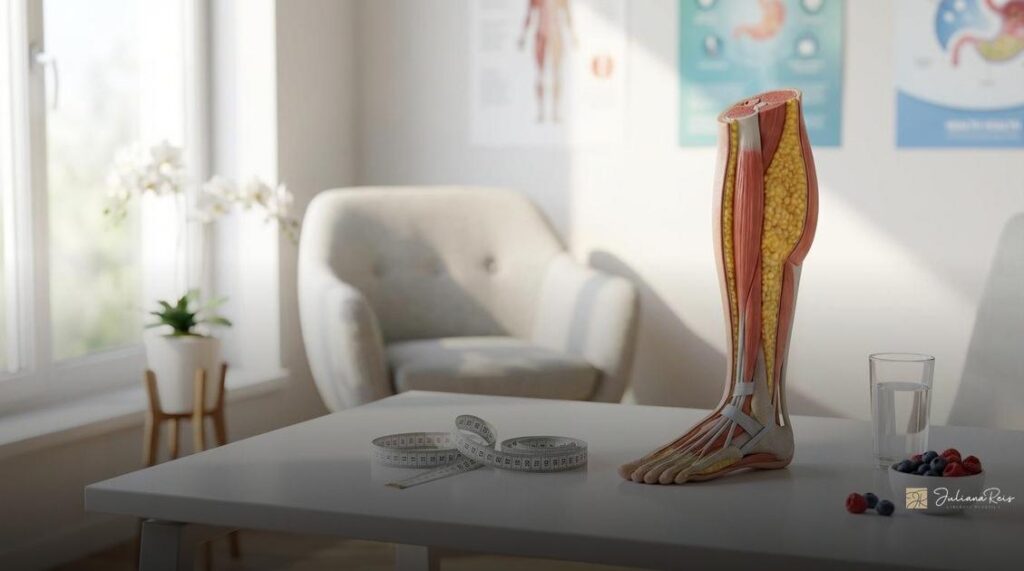
When you undergo a massive weight loss journey, whether through bariatric surgery or profound lifestyle changes, you achieve a monumental milestone in your life and your health. However, stepping onto the scale and seeing a healthy number does not always translate into feeling entirely comfortable in your own skin. The severe skin laxity and residual localized fat that remain can cause physical discomfort, hygiene issues, and emotional distress. This is where body contouring comes into play. I know the frustration of looking in the mirror and feeling that your outer appearance still does not reflect the immense effort you have invested in your health. As a plastic surgeon, my goal is to help you cross this final bridge safely and realistically.
My main specialty is plastic surgery, utilizing tools from lifestyle medicine to optimize your surgical results and overall well-being. I believe that true aesthetic success cannot be separated from comprehensive health. Throughout my years of practice, I have witnessed countless patients transform their lives not just by removing excess skin, but by embracing a holistic approach to their bodies. If you are seeking a miracle or a perfect, scarless body, I must be honest: that is not what reconstructive plastic surgery offers. What we do offer is a functional, harmonious, and significantly improved body contour, achieved through a strict alignment of expectations and medical excellence.
What Does Post-Weight Loss Body Contouring Involve?
The human skin is an incredibly resilient organ, but it has its elastic limits. When the body carries a significant amount of excess weight for a prolonged period, the skin stretches to accommodate the underlying adipose tissue. Once that weight is rapidly or massively lost, the skin simply cannot retract completely. This results in heavy folds of redundant skin hanging from the abdomen, arms, thighs, back, and breasts. These folds can cause a myriad of functional problems, including chafing, chronic dermatitis, fungal infections, and severe limitations in physical mobility. Therefore, post-weight loss body contouring is fundamentally a functional and reconstructive necessity, rather than just an aesthetic desire.
In my office, the first step is active listening. I need to understand how this excess skin impacts your daily life. Does it prevent you from wearing certain clothes? Does it hurt when you try to run or perform physical activities? Understanding your daily struggles allows me to tailor a surgical plan that addresses your specific anatomical needs. The procedures involved in post-weight loss body contouring typically include abdominoplasty (tummy tuck), mastopexy (breast lift), brachioplasty (arm lift), and cruroplasty (thigh lift). In some cases, we also perform lower body lifts or back lifts to address severe circumferential laxity.
It is crucial to understand that these procedures involve trading excess skin for permanent surgical scars. There is no way to remove massive amounts of tissue without leaving a visible mark. However, we meticulously plan the incisions to ensure they can be reasonably concealed beneath standard clothing or swimwear. I am always extremely sincere about the pros, cons, and real limits of these surgeries, ensuring that your decision is completely informed and safe.
Am I a Good Candidate for Reconstructive Breast and Abdomen Surgery?
Not every patient who has lost weight is immediately ready for the operating room. To be considered a safe candidate for reconstructive breast and abdomen surgery, you must meet several critical medical criteria. The most important factor is weight stability. I require my patients to maintain a stable weight for at least six months before considering any body contouring procedure. If you are still actively losing weight, operating too soon could lead to new areas of loose skin developing after the surgery. Conversely, if you regain a significant amount of weight after the procedure, the skin will stretch again, potentially ruining the surgical results and widening the scars.
Furthermore, post-bariatric patients often suffer from profound nutritional deficiencies. Bariatric surgery alters the way your body absorbs nutrients, frequently leading to low levels of protein, iron, vitamin B12, and other essential elements. A successful plastic surgery requires a robust healing capacity, and your body cannot heal a massive surgical wound if it is starved of building blocks. This is why I rely heavily on a multidisciplinary approach. Before we even schedule a date for surgery, we will evaluate your blood work in detail. If there are deficiencies, we will work together to correct them through supplementation and dietary adjustments. I use lifestyle medicine techniques to ensure your body is in the best possible state to undergo the trauma of surgery and to heal efficiently afterward.
Reconstructive breast and abdomen surgery often involves restoring the anatomical position of the tissues. In the abdomen, this means removing the “apron” of overhanging skin and tightening the abdominal muscles that were separated during the period of obesity. In the breasts, massive weight loss usually leaves them deflated and ptotic (sagging). We reshape the remaining breast tissue, remove the excess skin, and sometimes utilize silicone implants or the patient’s own tissue to restore volume and shape. The results are transformative, but they require patience, proper nutrition, and strict adherence to post-operative care.
How Do Arm and Thigh Liposuction Fit Into the Plan?
When dealing with the arms and thighs after massive weight loss, the approach requires careful anatomical evaluation. Many patients come to the clinic asking for arm and thigh liposuction, hoping that removing the residual fat will solve their problem. However, in the post-weight loss scenario, the primary issue is usually the skin, not just the fat. If we simply perform liposuction on an arm or thigh that already has poor elasticity and significant laxity, the skin will only sag further, worsening the aesthetic deformity.
That being said, liposuction is still a highly valuable tool in our arsenal. I frequently utilize high-performance liposculpture techniques in conjunction with skin excision surgeries. By carefully suctioning the fat first, we can thin out the tissue flap, preserve the underlying lymphatic and vascular structures, and allow for a safer, more contoured skin removal. This combined approach reduces surgical trauma and often leads to a more refined silhouette.
In cases where the skin quality is moderately preserved and the laxity is not extremely severe, we might explore the use of advanced skin retraction technologies during the liposuction procedure. These technologies deliver controlled energy to the deep dermal layers, stimulating collagen production and promoting tissue contraction. It is important to note that these technologies are not magic wands; they have specific indications and limits. During our consultation, I will evaluate your tissue quality and provide a realistic assessment of whether liposuction alone, assisted by retraction technologies, is sufficient, or if a traditional brachioplasty or cruroplasty (which involve longer incisions) is the mandatory route for a satisfactory result.
How Can Lifestyle Choices Impact Realistic Plastic Surgery Expectations?
As I mentioned earlier, my practice is deeply rooted in the philosophy that the scalpel is only one part of your transformation. The outcome of your plastic surgery does not depend solely on my technical skills in the operating room. It is intrinsically tied to your daily habits. Establishing realistic plastic surgery expectations means acknowledging that surgery can remove the excess skin and fat, but it cannot cure a sedentary lifestyle or a poor diet.
I apply knowledge based on the pillars of lifestyle medicine to guide my patients before and after their procedures. Managing inflammation is a critical component of this. A diet high in ultra-processed foods, chronic stress, and poor sleep all contribute to systemic inflammation, which can severely impair wound healing, increase the risk of complications, and exacerbate post-operative swelling. By focusing on nutrient-dense foods, adequate hydration, and restorative sleep, we create an internal environment that promotes rapid and high-quality healing.
Physical activity is another non-negotiable pillar. I always emphasize that exercises are fundamental for maintaining surgical results and ensuring comprehensive health. While you must rest during the immediate post-operative period, returning to a consistent exercise routine once medically cleared is vital. Building muscle mass improves your basal metabolic rate, helps fill out the skin envelope, and enhances your overall body contour. You do not need to become an elite athlete, but regular, sustainable movement is required. Whether it is walking, strength training, or other activities you enjoy, the goal is consistency. When patients understand that plastic surgery is a partnership between the surgeon and their own daily choices, the satisfaction rates skyrocket.
Could Disproportionate Legs After Weight Loss Be Lipedema?
This is a profoundly important topic that frequently arises in my practice. Many women experience massive weight loss, their upper body shrinks significantly, their face becomes thin, but their legs and arms remain disproportionately large, heavy, and painful. Often, they blame themselves, thinking they just need to diet harder or exercise more. In reality, this specific pattern of fat distribution, combined with pain and easy bruising, strongly suggests the presence of Lipedema.
Lipedema is not a disease of the adipose tissue; it is a connective tissue disease in which the adipose tissue is one of the main components affected. It is not just a greater accumulation of adipocytes: there is more inflammation, more fibrosis, more flaccidity, more ligament laxity, and a higher risk of orthopedic complications. When I examine these patients, I often look for the tourniquet sign, a distinct cuffing of fat just above the ankles or wrists, while the feet and hands remain spared. It is also crucial to note that while pain is the most common symptom (present in about 86% of cases), its absence does not automatically rule out the condition. However, symptoms must be present; mere disproportion without symptoms is not lipedema.
Lipedema and obesity are different diseases, but they extremely commonly coexist. The fat accumulation and the associated pain and heaviness can lead to a more sedentary lifestyle, which aggravates weight gain. Even after bariatric surgery resolves the obesity, the lipedema tissue often remains stubbornly behind. Thin women can indeed have lipedema and are often extremely symptomatic. Weight gain is not a necessary condition to make the diagnosis, meaning lipedema is not an exclusive condition of obese women. In men, this condition is extremely rare and is generally associated with hormonal problems or other severe pathologies.
I have great expertise in lipedema and was one of the doctors to perform one of the first surgeries for the pathology in the country in 2015, alongside Dr. Fábio Kamamoto. Today, we know that lipedema surgery must be approached very differently from standard cosmetic liposuction. The surgical treatment requires meticulous care to avoid lymphatic damage and to address the severe fibrosis. Because of the complexity of the disease, conservative treatment for lipedema is absolutely essential. There is no magical treatment for lipedema and no single highly effective treatment, but many small interventions together yield very good results. This includes an anti-inflammatory diet, manual lymphatic drainage, compression garments, and controlled physical activity. That is why at the clinic, we emphasize a multidisciplinary team for lipedema treatment, providing comprehensive pre and post-operative follow-up for lipedema to ensure the disease is managed holistically.
Why Choose a USP-Trained Plastic Surgeon for Your Journey?
Undergoing major reconstructive surgery or lipedema treatment is one of the most significant physical and emotional events of your life. The safety and outcome of these procedures depend heavily on the rigorous training and ethical compass of the professional you choose. As a USP-trained plastic surgeon, my medical foundation was built at the Hospital das Clínicas of the University of São Paulo, one of the most demanding and prestigious medical institutions in Latin America. This rigorous academic and practical environment instilled in me a profound respect for human anatomy, surgical safety protocols, and evidence-based medicine.
Patients often search the internet for the best lipedema surgeons in Brazil or the most famous body contouring experts, but what you truly need is a dedicated medical partner who views you as a whole person, not just a surgical case. My approach focuses on treating the patient comprehensively. I do not sell perfect bodies or make unattainable promises. Instead, I offer my extensive experience, technical precision, and an unwavering commitment to your long-term health. The ideal doctor for lipedema surgery, or any major body contouring procedure, is a plastic surgeon who understands the pathophysiology behind the aesthetic complaint and operates with absolute transparency.
I want you to feel completely secure in your choices. If an intervention is not safe or if the risks outweigh the benefits given your current health status, I will tell you directly. We will then work together, utilizing lifestyle medicine techniques and our multidisciplinary support system, to get you to a place where surgery becomes a safe and viable option.
How to Begin Your Transformation with Telemedicine or In-Person Care?
Access to specialized care should not be limited by geography. I treat patients from all over Brazil and from various parts of the world. To make this process as smooth and accessible as possible, I utilize telemedicine extensively. Through an online consultation, we can have our first deep conversation. I can actively listen to your medical history, review your weight loss journey, assess your photographs, and begin structuring a personalized treatment plan.
For the surgical procedures and physical examinations, I welcome my patients for in-person care at the Instituto Lipedema Brasil Ibirapuera unit. Located strategically near the Congonhas airport in São Paulo, this modern facility is designed to offer maximum comfort and safety. As the Clinical Director of this unit, I have ensured that every detail of the patient experience reflects our core values of humanization and medical excellence. Whether you need an extensive post-weight loss body lift or specialized surgery and treatment for lipedema, our center is equipped to support you through every phase of your recovery.
Frequently Asked Questions About Body Contouring and Lipedema
1. How long do I need to wait after bariatric surgery to have body contouring?
You must wait until your weight has completely stabilized, which usually takes between 12 to 18 months after the bariatric procedure. Furthermore, your weight must remain stable for at least 6 consecutive months before we can safely proceed with skin removal surgeries.
2. Will my health insurance cover lipedema liposuction?
Currently, health insurances do not cover this surgery. Lipedema was recognized as a disease by the ICD-11, but health plans pay for specific procedures. The procedure required is liposuction, which is not on the ANS (National Health Agency) list for this specific indication. Therefore, it is considered an out-of-pocket expense.
3. Can I do my arms, thighs, abdomen, and breasts all in one surgery?
No, performing all these procedures simultaneously is not safe. Extensive body contouring must be staged into multiple surgeries to minimize surgical trauma, limit blood loss, and reduce the time under anesthesia. Safety is always the highest priority.
4. I lost weight but my legs still hurt and bruise easily. Is this normal?
It is not normal for your legs to be chronically painful and prone to bruising, regardless of your weight. These are classic symptoms of lipedema. If you experience these symptoms, it is essential to undergo an evaluation with a professional who has great expertise in lipedema to obtain an accurate diagnosis.
5. Will the scars from the skin removal ever disappear?
Surgical scars are permanent and will never completely disappear. They will fade, flatten, and lighten over time, usually maturing over 12 to 18 months. We place the incisions in the most discreet anatomical areas possible, but you must be prepared to accept the scars in exchange for an improved body contour.
Why Trust This Content?
- This article was written based on the safety guidelines and surgical protocols of the Brazilian Society of Plastic Surgery (SBCP) and the American Society of Plastic Surgeons (ASPS).
- The information regarding the pathophysiology and treatment of connective tissue diseases is aligned with the current global research from the Lipedema Foundation and the protocols established by Instituto Lipedema Brasil.
- The content was entirely developed and reviewed by me, Dra. Juliana Reis (CRM-SP 120293 | RQE 47596), ensuring that the medical insights provided follow the safest, most realistic, and scientifically accurate standards in modern reconstructive plastic surgery.
Your journey to reclaiming your body after massive weight loss is a testament to your strength and dedication. You deserve a medical team that honors that effort with technical excellence, absolute sincerity, and comprehensive health care. If you are ready to take the next step toward your functional and aesthetic recovery, I invite you to schedule your consultation. Whether through telemedicine or in-person at the Instituto Lipedema Brasil Ibirapuera, we will map out the safest and most effective plan for your unique case. Let us work together to align your expectations and achieve the well-being you have fought so hard to attain.