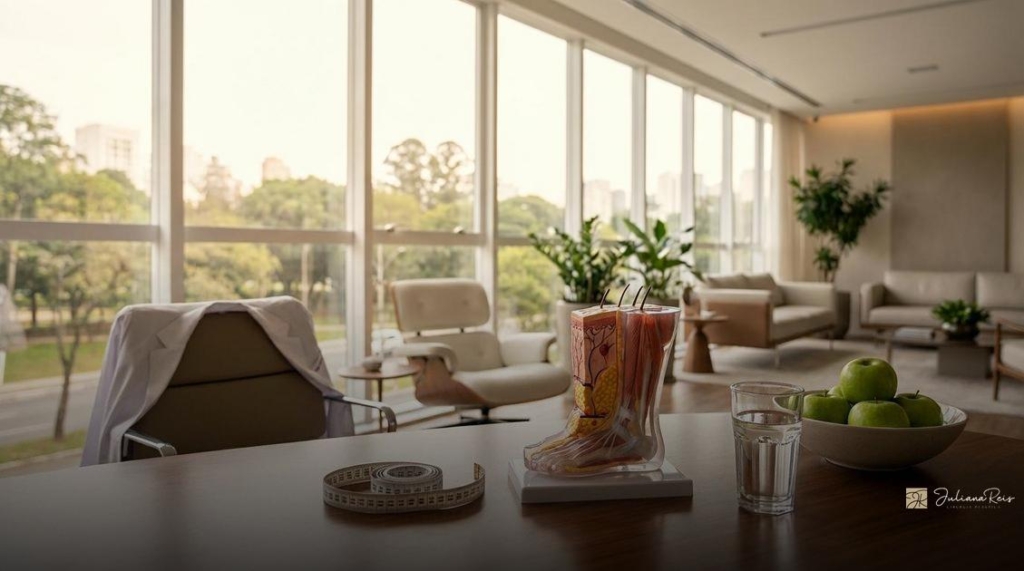
Do you feel constant pain and heaviness in your legs that no diet seems to resolve? Or perhaps you are looking to improve your body contour but fear aesthetic promises that do not match reality? In my office, the first thing I do is actively listen to your story. I understand the deep frustration of trying to buy boots that won’t zip up the calf, or the feeling that your body does not reflect your healthy habits. If you are searching for a safe, comprehensive, and effective treatment for lipedema, you have come to the right place. My name is Dra. Juliana Reis, and my goal is to help you regain your quality of life through technical excellence and humanized care.
For years, many women have wandered from office to office without a proper diagnosis, often labeled as “obese” or told they simply need to “try harder” at the gym. I want to validate your experience right now: what you feel is real. Lipedema is a chronic condition, but with the right approach—combining surgical expertise and lifestyle management—it is often possible to live without pain and with a body that feels like your own again.
The outcome of your plastic surgery doesn’t depend solely on the operating room. Having trained at USP, I realized early on that aesthetic success and recovery are tied to your lifestyle. That is why we treat patients with Lipedema and aesthetic concerns by adjusting nutrition and habits even before thinking about the scalpel. As the clinical director of the Ibirapuera unit of Instituto Lipedema Brasil, I offer follow-up care with a multidisciplinary team. I am extremely transparent about the pros, cons, and real limits of surgery, so your decision is 100% safe.
What exactly is Lipedema and why does it hurt?
One of the most common misconceptions I encounter in my practice is the idea that lipedema is simply “fat.” It is crucial to understand that lipedema is not a disease of the adipose tissue alone; it is a connective tissue disease in which the adipose tissue is one of the main components affected. This distinction changes everything about how we approach the treatment.
Lipedema involves chronic inflammation, fibrosis (scarring of the tissue), flaccidity, and often ligament laxity, which can lead to a higher risk of orthopedic complications over time. Unlike common weight gain, where fat is distributed relatively evenly or in response to caloric intake, lipedema fat is stubborn. It often presents in a disproportionate manner—typically in the legs, thighs, hips, and arms—while the hands and feet remain unaffected. This creates the characteristic “tourniquet sign” (often referred to as the cuff sign) at the ankles or wrists.
Pain is the most common symptom, but it is not present in 100% of cases. Studies suggest it affects about 86% of patients, meaning there is lipedema without pain in roughly 14% of cases. However, the absence of pain does not rule out lipedema if other signs are present. Conversely, patients with disproportionate fat distribution but absolutely no symptoms usually do not have lipedema. This nuance is why a diagnosis by a plastic surgeon with extensive experience in the field is vital.
Is surgery the only solution for Lipedema?
The short answer is no. There is no magical treatment for lipedema, and there is no single highly effective treatment that works in isolation. Instead, we rely on a combination of many small interventions that, together, can yield a very good result. This concept is the foundation of my practice as a plastic surgeon focused on lifestyle.
Surgery is a powerful tool—often the most effective for debulking the diseased tissue—but it must be part of a broader strategy. I use tools and pillars of lifestyle medicine in my practice because inflammation is a systemic issue. If we operate on a body that is highly inflamed, the recovery is slower, and the results are less stable. Therefore, conservative treatment for lipedema is often the first step.
The role of conservative treatment
Before we schedule any procedure, we look at your life as a whole. This includes:
- Anti-inflammatory Nutrition: While I do not prescribe specific diets, I work closely with nutritionists who specialize in reducing systemic inflammation. This prepares your tissue for surgery.
- Physical Activity: Exercises are fundamental. They must have controlled intensity and volume to evaluate individual adaptation and avoid high impact that could hurt joints. Water exercises are excellent due to the natural compression of water, but they are definitely not the only ones recommended. Weightlifting, Pilates, cycling, yoga, and walking are also excellent options.
- Compression Therapy: Wearing medical-grade compression garments helps manage swelling and supports the lymphatic system.
How does the surgical treatment for Lipedema work?
When conservative measures have been optimized, or when the volume of tissue impairs mobility and quality of life, we consider the surgical route. I was one of the first doctors to perform surgery for this pathology in Brazil in 2015, alongside Dr. Fábio Kamamoto, and since then, the techniques have evolved significantly to prioritize safety and lymphatic protection.
The gold standard for treating lipedema surgically is specialized liposuction. This is not the same as cosmetic liposuction for body contouring in healthy tissue. In lipedema surgery, we must be extremely careful to preserve the lymphatic vessels, which are often fragile in these patients. We use specific cannulas and techniques designed to remove the diseased fat while minimizing trauma to the surrounding structures.
Skin Retraction Technologies
One of the biggest concerns for women with lipedema is flaccidity. Because the connective tissue is affected, the skin may not snap back as easily after fat removal. In my surgeries, I utilize advanced technologies for skin retraction. While I cannot cite specific brand names due to medical advertising regulations, know that these tools apply energy (such as plasma or radiofrequency) to the subdermal layers to stimulate collagen production and tighten the skin, improving the final aesthetic result significantly.
Who is the ideal candidate for this surgery?
The ideal patient is someone who has a confirmed diagnosis and has engaged in conservative management but still suffers from pain, heaviness, or disproportion that affects their daily life. It is also important to differentiate between lipedema and obesity. Lipedema and obesity are different diseases. One does not turn into the other; however, it is extremely common for the two to coexist. The fat accumulation of lipedema and the associated symptomatology can lead to a more sedentary lifestyle, which can aggravate weight gain.
If you have a high BMI, we may need to address the metabolic components of obesity first. The metabolic risk of pure lipedema tends to be lower than in isolated obesity; however, when there is associated obesity, the metabolic risk becomes that of obesity. My multidisciplinary team helps manage this to ensure you are in the safest possible condition for surgery.
Can thin women have Lipedema?
Yes, absolutely. Lipedema is most commonly associated with obesity, but thin women can indeed have lipedema and are often extremely symptomatic. I see many patients who are technically “thin” by BMI standards but have painful, disproportionate legs and the characteristic texture of lipedema fat. Weight gain is not a necessary condition to make the diagnosis. Therefore, lipedema is not an exclusive condition of obese women.
This group of patients often suffers significantly from “medical gaslighting,” being told their pain is psychological or that they are simply imagining the disproportion. Validating these patients’ experiences is a core part of my approach at Instituto Lipedema Brasil.
High-Performance Liposculpture and Body Contouring
While a large part of my practice is dedicated to lipedema, I also have extensive experience in aesthetic body contouring and post-massive weight loss surgeries. Many women—and some men—seek my care for high-performance liposculpture, tummy tucks (abdominoplasty), and breast surgeries.
For patients who have undergone bariatric surgery or massive natural weight loss, reconstructive surgeries are essential to close the cycle of obesity treatment. These procedures restore body contour and function. My approach remains the same: safety, frankness, and technical excellence. I will never promise a “perfect” body, but I will promise the best possible version of your body, respecting your anatomy and health.
Whether it is arm and thigh liposuction or a complex body lift, I apply the same rigorous standards of safety. I operate in top-tier hospitals in São Paulo, ensuring that every safety protocol is strictly followed.
The importance of the Ibirapuera Unit of Instituto Lipedema Brasil
I am proud to serve as the manager and Clinical Director of the Ibirapuera unit of Instituto Lipedema Brasil. We opened this unit in 2024 to expand our capacity to care for women from all over the country. Located near Congonhas Airport, our clinic is easily accessible for patients flying in from other states or abroad.
Our facility is designed to be a safe haven. Here, you will find a multidisciplinary team for lipedema treatment that includes endocrinologists, nutritionists, and physiotherapists, all communicating with the surgical team. This integration is rare and ensures that your pre- and post-operative follow-up for lipedema is seamless.
For those who cannot visit us in person for the initial assessment, I maintain a strong presence in telemedicine. We can conduct comprehensive initial consultations online to map out a treatment plan before you travel for the actual procedure.
Realistic Expectations: The key to satisfaction
I value medical sincerity over unrealistic expectations. During our consultation, I will be extremely honest about what surgery can and cannot achieve. Surgery can significantly reduce pain, improve mobility, and harmonize body contour. However, it requires commitment to the post-operative plan.
Recovery involves wearing compression garments, attending lymphatic drainage sessions, and maintaining a healthy lifestyle. There is no surgery that allows you to neglect your health afterward. My USP-trained plastic surgeon background has taught me that the best results come from a partnership between doctor and patient.
Frequently Asked Questions (FAQ)
1. Does health insurance cover lipedema surgery in Brazil?
Regarding health insurance, Lipedema was recognized as a disease by the ICD-11 (International Classification of Diseases). However, health plans cover procedures based on the ANS (National Health Agency) list. Currently, the surgical treatment for lipedema (specialized liposuction) is not on the ANS list. Therefore, to date, health insurances do not cover this surgery, though they may cover hospital fees in some specific legal instances, which varies greatly.
2. Is lipedema a hormonal problem?
Lipedema is predominantly a female condition, heavily influenced by hormones. Onsets or flare-ups often coincide with hormonal shifts like puberty, pregnancy, or menopause. Lipedema in men is extremely rare; when it occurs, it is generally associated with hormonal problems or severe liver disease.
3. Can I exercise with lipedema?
Not only can you, but you should. Inactivity worsens the condition by impairing lymphatic flow and muscle pump function. The key is finding low-impact activities that you enjoy and can sustain long-term.
4. How soon can I travel after surgery?
For patients coming from abroad or other states to our Ibirapuera unit, we usually recommend staying in São Paulo for at least 10 to 14 days after surgery. This allows us to monitor the immediate recovery and ensure there are no complications before you fly home.
Why trust this content?
- This article was written based on the guidelines of the Brazilian Society of Plastic Surgery (SBCP) and the American Society of Plastic Surgeons (ASPS).
- It incorporates protocols from the Lipedema Foundation regarding the diagnosis and management of the disease.
- The content was reviewed and is narrated by Dra. Juliana O. G. Reis (CRM-SP 120293 | RQE 47596), a pioneer in lipedema surgery in Brazil since 2015 and Clinical Director of Instituto Lipedema Brasil (Ibirapuera).
- The information provided respects the ethical standards of the Federal Council of Medicine (CFM), prioritizing patient safety and realistic information over commercial promises.
Conclusion
Living with lipedema or dissatisfaction with your body contour can be an isolating experience, but you do not have to face it alone. Whether you are seeking relief from the pain of lipedema or looking for a trusted plastic surgeon for body contouring, my team and I are ready to welcome you.
At the Ibirapuera unit of Instituto Lipedema Brasil, we combine the most advanced surgical techniques with a human, lifestyle-centered approach. If you seek technical excellence combined with real care for your health, schedule your in-person or online evaluation with me. Let’s map out the best plan for your case and start your journey toward a lighter, healthier life.