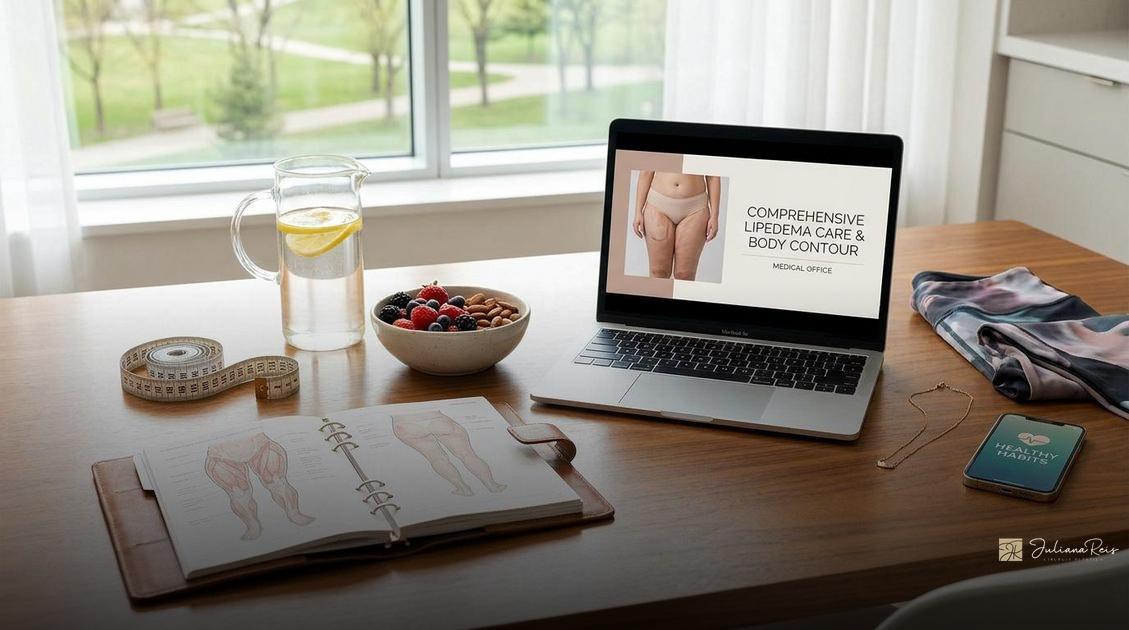
Do you feel constant pain and heaviness in your legs that no diet can resolve? Or are you looking to improve your body contour, but fear aesthetic promises that do not match reality? In my office, the first thing I do is actively listen to your story. We live in a world where social media constantly sells perfect, heavily edited bodies. However, my main goal as a plastic surgeon is to deliver real medical outcomes. The outcome of your plastic surgery does not depend solely on what happens inside the operating room. Having trained at the University of São Paulo, I realized early in my career that aesthetic success and proper recovery are intimately tied to your daily habits. I use tools from lifestyle medicine in my practice as a plastic surgeon to ensure that we treat you as a whole person, not just a localized aesthetic complaint. This means we adjust your nutrition and daily habits even before thinking about using the scalpel. Whether you need lipedema treatment, high-performance liposculpture, or post-weight loss body contouring, understanding the truth behind the surgical process is fundamental. I am here to guide you with absolute sincerity.
What are realistic plastic surgery expectations?
Patients often come to the clinic with images they saw online, hoping to replicate a specific look. It is necessary to understand the difference between digital filters and biological reality. Realistic plastic surgery expectations start with an honest conversation about your unique anatomy, skin elasticity, and overall health. Surgery is a medical procedure, not a magic wand. For example, high-performance liposculpture can significantly improve your body contour, but it respects your bone structure and muscle tone. The same applies to arm and thigh liposuction. The procedure removes the fat, but your skin needs to retract properly to show the new contour. We use various advanced technologies for skin retraction during the surgery, but the final outcome also depends heavily on your body’s natural healing capacity and collagen production. Scars are a permanent part of any surgical procedure, though we place them strategically to be as discreet as possible. Recovery takes time, and swelling can last for months. Acknowledging these facts does not diminish the beauty of the results; instead, it guarantees that your decision is completely safe and grounded in medical truth.
How to know if you have lipedema or just fat?
Distinguishing between regular weight gain and a specific pathology is a frequent concern. Lipedema is not a disease of the adipose tissue; it is a connective tissue disease, in which the adipose tissue is one of the main components affected. This condition causes a disproportionate accumulation of fat, typically in the legs, thighs, and sometimes the arms. I know the frustration of trying to buy boots that won’t zip up the calf. Many women suffer for years without a proper diagnosis, blaming themselves for diets that never seem to work on their lower body. However, lipedema is not just a greater accumulation of adipocytes: there is more inflammation, more fibrosis, more flaccidity, more ligament laxity, and a higher risk of orthopedic complications. One classic clinical indicator is the tourniquet sign, where there is a clear physical division between the swollen tissue and the normal tissue, often seen at the ankles or wrists. Pain is the most common symptom, but it is not present in 100% of cases: it is in about 86% of patients, so there is lipedema without pain in 14%. The absence of pain does not rule out lipedema. However, there must be symptoms: patients with disproportionate fat distribution but absolutely no symptoms do not have lipedema. A proper diagnosis requires a detailed clinical evaluation.
Can a thin person have lipedema?
There is a widespread misconception that this condition only affects individuals who are overweight. Lipedema is most commonly associated with obesity, but thin women can indeed have lipedema and are often extremely symptomatic. Weight gain is not a necessary condition to make the diagnosis. Therefore, lipedema is not an exclusive condition of obese women. Additionally, it is not true that thin women have a more pronounced disproportion regarding lipedema; the presentation varies greatly from patient to patient regardless of their overall weight. The metabolic profile is also an important factor to consider. The metabolic risk tends to be lower than in isolated obesity; however, when there is associated obesity, the metabolic risk becomes that of obesity. Lipedema and obesity are different diseases. One does not turn into the other; however, it is extremely common for the two to coexist. The fat accumulation of lipedema and the associated symptomatology (pain, heaviness in the legs, etc.) can lead to deformities and a more sedentary lifestyle, facts that can aggravate weight gain. In other words: they are different diseases, but they can coexist.
Can lipedema affect men?
While the vast majority of patients seeking lipedema treatment are women, questions occasionally arise regarding the male population. Lipedema in men is extremely rare. In men, it is generally associated with hormonal problems or other pathologies. This condition is predominantly female. Because the disease is so closely tied to the female anatomical and genetic profile, the diagnostic criteria and treatment protocols are overwhelmingly designed for women. When men present with severe swelling or fat accumulation in the lower limbs, we usually investigate other medical conditions first to ensure a correct diagnosis and appropriate medical care.
What is the best conservative treatment for lipedema?
Before considering any surgical intervention, we must establish a strong clinical foundation. There is no magical treatment for lipedema and there is no single highly effective treatment, but there are many small interventions that, together, can yield a very good result. This also justifies the importance of follow-up with someone who understands the subject, to provide options that make sense for each patient. The conservative treatment for lipedema focuses on managing symptoms, reducing inflammation, and preventing the condition from worsening. We rely heavily on a multidisciplinary team for lipedema treatment, which includes nutritionists, endocrinologists, and vascular specialists. A key component of this approach is movement. Physical exercises must have controlled intensity and volume, evaluate individual adaptation, and avoid high impact. Water exercises are excellent but are definitely not the only ones recommended. Weightlifting, pilates, cycling, yoga, and walking are excellent options. Furthermore, wearing proper compression garments and undergoing targeted lymphatic drainage are essential practices that help manage the daily discomfort and heaviness in the limbs.
Why is lifestyle important before plastic surgery?
As a plastic surgeon focused on lifestyle, I strongly emphasize that your daily habits dictate how your body responds to surgical trauma. I use the pillars of lifestyle medicine to optimize your health before you enter the operating room. Nutrition plays a vital role here. An anti-inflammatory diet helps reduce systemic swelling, improves tissue quality, and provides the necessary nutrients for collagen production and wound healing. Good sleep hygiene and stress management directly impact your immune system and recovery speed. Patients who engage in regular physical activity have better cardiovascular conditioning, which makes anesthesia safer and accelerates postoperative mobilization. We do not demand perfection, but we do encourage a genuine commitment to comprehensive health. Preparing your body through these lifestyle adjustments makes the surgical procedure much safer and enhances the long-term maintenance of the aesthetic and functional results.
How does lipedema surgery work?
When conservative measures are optimized and the patient still suffers from significant pain or functional limitation, we consider surgical intervention. The ideal doctor for lipedema surgery is a plastic surgeon with experience in lipedema. I was one of the first doctors to perform this surgery in Brazil in 2015 alongside Dr. Fábio Kamamoto. The surgery and treatment for lipedema involve a highly specialized form of liposuction that aims to remove the diseased fibrotic fat while carefully preserving the delicate lymphatic vessels. Arm and thigh liposuction in these cases is not merely aesthetic; it is a functional restorative procedure designed to alleviate pain and improve mobility. During the surgery, we use specific technologies for skin retraction to address the flaccidity that often accompanies the removal of large volumes of tissue. It is a meticulous process that requires deep anatomical knowledge. The pre and post-operative follow-up for lipedema is just as crucial as the surgery itself. The multidisciplinary team monitors your progress, manages postoperative swelling, and guides your rehabilitation to ensure the best possible medical outcome.
Does health insurance cover lipedema surgery?
The financial aspect of treatment is a major concern for many patients. Regarding health insurance, Lipedema was recognized as a disease by the ICD-11 (International Classification of Diseases), but health plans pay for procedures, which in this case is LIPOSUCTION, and that is not on the ANS (National Health Agency in Brazil) list, which regulates the procedures to be covered by health plans. Therefore, to date, health insurances do not cover this surgery. While this can be a frustrating reality, it is important to have clear financial planning. We discuss all costs openly during your consultation, ensuring complete transparency. Some patients choose to undergo conservative treatment while organizing themselves for the surgical step in the future. Our priority is to provide you with all the necessary information so you can make an informed and secure decision regarding your health investment.
What is post-weight loss body contouring?
In addition to lipedema, I frequently care for patients who have experienced massive weight loss, either through bariatric surgery or significant lifestyle changes. These incredible personal victories often result in a large amount of excess skin that causes physical discomfort, hygiene issues, and emotional distress. Post-weight loss body contouring involves a series of procedures designed to reshape the body and restore functionality. This typically includes reconstructive breast and abdomen surgery. An abdominoplasty (tummy tuck) removes the redundant abdominal skin and repairs the weakened abdominal muscles, restoring core stability. Breast surgeries may involve a mastopexy (breast lift) to restore volume and position. We also frequently perform lifting procedures on the arms and thighs to remove excess tissue. Because these surgeries are extensive, we plan them carefully, sometimes dividing them into multiple stages to ensure patient safety and a smooth recovery process. The transformation is profound, bridging the gap between the weight loss achievement and the patient’s desired body image.
How to find the best professionals for your treatment?
Patients often search for the best lipedema surgeons in Brazil, and the answer involves looking for a plastic surgeon with deep experience in the disease and a commitment to multidisciplinary care. The Instituto Lipedema Brasil Ibirapuera unit stands out as a center of excellence because we integrate surgical expertise with comprehensive health management. We offer both in-person consultations and telemedicine. Telemedicine has revolutionized our ability to connect with patients from all over Brazil and abroad. It allows us to perform a thorough initial assessment, review medical history, and outline a treatment plan before the patient even travels. For those flying in, our Ibirapuera unit is strategically located near the Congonhas airport in São Paulo, making the logistics much more convenient. When patients begin their journey, they often search for long-tail keywords related to lipedema, nutrition, and reconstructive surgeries, such as ‘anti-inflammatory diet for lipedema’, ‘how to reduce leg swelling naturally’, or ‘recovery time for post-weight loss abdominoplasty’. Understanding these topics is the first step toward seeking professional help.
Why trust this content?
- This article was written based on the guidelines of the Brazilian Society of Plastic Surgery (SBCP) and reviewed by me, Dra. Juliana Reis (CRM-SP 120293 | RQE 47596), ensuring that the information follows the safest and most realistic medical protocols in modern plastic surgery.
- The surgical and clinical approaches to lipedema described here strictly follow the updated protocols of the Instituto Lipedema Brasil, where I serve as Clinical Director of the Ibirapuera unit.
- Information regarding connective tissue disease, the tourniquet sign, and symptom statistics is grounded in global research from the Lipedema Foundation and current medical literature.
- The emphasis on comprehensive health and lifestyle medicine tools is supported by the medical guidelines and training from the Hospital das Clínicas da USP, reflecting a multidisciplinary standard of patient care.
Frequently Asked Questions (FAQ)
What is the difference between lipedema and lymphedema?
Lipedema is primarily a connective tissue disease that causes a disproportionate accumulation of inflamed fat and usually affects both legs symmetrically. Lymphedema is a failure of the lymphatic system that leads to a buildup of lymphatic fluid, often presenting asymmetrically in just one limb. While they are different, untreated lipedema can eventually impair the lymphatic system, leading to a combined condition known as lipo-lymphedema.
Does lipedema have a cure?
Currently, there is no definitive medical cure for lipedema. However, it is highly manageable. With the correct combination of conservative treatment and, when indicated, specialized liposuction, patients can experience a massive reduction in pain, improved mobility, and a better quality of life. The goal of the treatment is control and symptom relief.
Can I undergo surgery without conservative treatment first?
We strongly advise against it. Entering the operating room highly inflamed increases surgical risks and prolongs recovery. Implementing conservative measures—such as an anti-inflammatory diet, proper physical exercises, and compression therapy—prepares the tissue, reduces systemic swelling, and ensures a safer procedure with far superior functional and aesthetic outcomes.
How long is the recovery from lipedema surgery?
The initial recovery period usually requires two to three weeks of rest from strenuous activities. However, the complete healing process, including the resolution of swelling and final skin retraction, can take up to six months or more. Consistent postoperative care, including lymphatic drainage and the use of compression garments, is essential during this entire period.
Your Next Step Toward Comprehensive Care
If you are tired of dealing with constant pain, heaviness in your legs, or if you seek a plastic surgeon who values extreme sincerity over unattainable aesthetic promises, you are in the right place. Technical excellence combined with real care for your overall health is the foundation of our work. Do not let digital filters dictate your expectations or make you feel inadequate. Let us map out the best, safest, and most realistic plan for your specific case. I invite you to schedule your in-person or online evaluation at the Ibirapuera unit of Instituto Lipedema Brasil. Together, we will pursue real medical outcomes that respect your body and improve your quality of life.